Decision Mechanics

Insight. Applied.

  • Services
    • Decision analysis
    • Big data analysis
    • Software development
  • Articles
  • Blog
  • Privacy
  • Hire us

Data cascades—the impact of data mismanagement

May 3, 2021 By editor

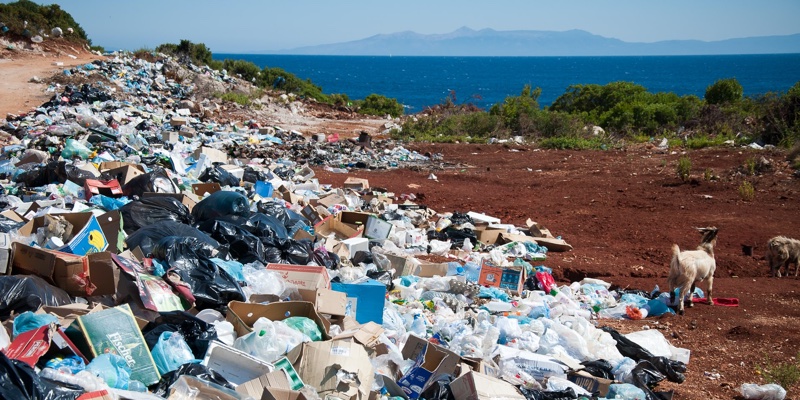
mount of garbage

It’s data science, folks. It lives and dies by the quality of the data.

Google Research recently published a paper where they argue that machine learning solutions are being undermined by a lack of focus on data quality issues. They note that

[…] data is the most under-valued and de-glamorised aspect of AI

and that data is

[…] viewed as ‘operational’ relative to the lionized work of building novel models and algorithms.

Ironically, data science arose from statisticians’ disinterest in the collection and wrangling of data. Revisiting the sins of the father, I guess.

The Google researchers point to the prevalence of data cascades—upstream events that have compounding negative effects on project outcomes.

92% of AI researchers interviewed for the study had suffered from a data cascade.

Four categories of data cascade were identified.

  • Interacting with physical world brittleness
  • Inadequate application-domain expertise
  • Conflicting reward systems
  • Poor cross-organisational documentation

All of these issues conspire to rock the very foundations of the models we increasingly rely on.

Data quality is hard to get right. It’s a much harder problem than model development. And, while the specific choice of model is often unimportant, the same is never true for the data that is fed into it.

One reason data quality to so hard to achieve and maintain is that it’s a process problem—often involving multiple organisations and stakeholders.

As the authors of the study lament,

Data quality carries an elevated significance in high-stakes AI due to its heightened downstream impact, impacting predictions like cancer detection, wildlife poaching, and loan allocations.

We need to stop fetishising algorithms at the expense of data. Tutorials on machine learning libraries and Python are smeared across the Internet. We need to promote and reward good data hygiene.

The consequences of continuing to undervalue data work are stark.

Garbage in, garbage out.


Photo by Antoine GIRET on Unsplash
Filed Under: Artificial intelligence, Data analysis, Data science Tagged With: data cascade, data quality

Guess the Correlation

April 14, 2021 By editor

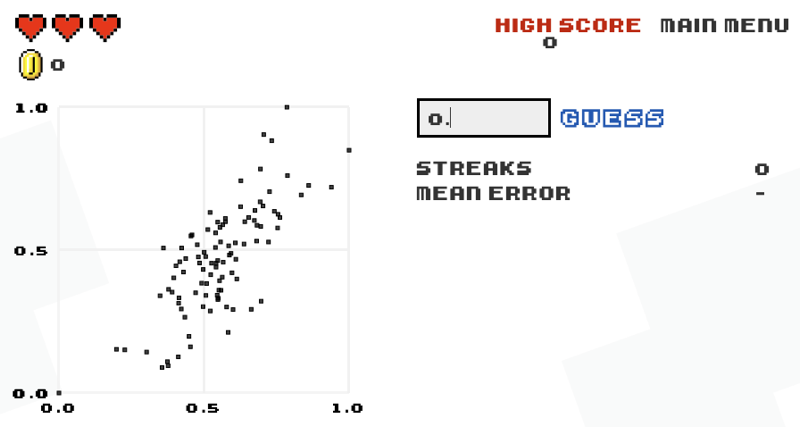
People find it difficult to intuitively gauge the level of correlation between variables.

Guess the Correlation is an 80s-style video game that lets you flex your estimation muscles.

Just be aware that it doesn’t seem to present negative correlations, so you’ll have to intuit those elsewhere.

Filed Under: Data analysis, Data science Tagged With: correlation, game, statistics

Why it’s hard to find good data science courses

April 10, 2021 By editor

Why is it so hard to find effective data science courses? For instance, courses that cover the practical work involved in going from problem to solution?

This is a question I was asked last week. To answer it, we can employ basic mathematics.

Draw a Venn diagram. Include the following sets.

  • people who are good at statistics
  • people who are good at coding
  • people who have good social skills
  • people who have good teaching skills
  • people who have good technical writing skills
  • people who couldn’t be making a shitload more money doing something else

Count the number of people in the intersection of those sets. That’s why.

Filed Under: Data science Tagged With: training

Mathematics & Statistics Awareness Month

April 9, 2021 By editor

April is Mathematics & Statistics Awareness Month.

Let’s celebrate it by making sure we embrace statistics in our data science projects. It’s not just about Python, folks!

Filed Under: Data science Tagged With: statistics

Sharks are definitely scarier than mosquitos

March 24, 2021 By editor

Bill Gates retweeted a World Health Organization infographic showing that mosquitos kill vastly more people than sharks every year—on the order of 100,000 times more.

In his tweet Bill captioned the infographic with, "Why I would rather encounter a shark in the wild rather than a mosquito." Presumably he’s referring to man-eating sharks.

This was an informal comment designed to highlight the misery caused by malaria—a cause that is at the centre of Bill’s philanthropy. Clearly it wasn’t supposed to be a serious risk assessment.

But it illustrates how confusing conditional probabilities are, and how easy it is to make invalid statistic inferences.

The data in the infographic refer to the probability that, given you are dead, you were killed by a shark or a mosquito. Chances are that it was a mosquito—not a shark. That seems intuitive.

Technically, we can denote this as

$P(shark|death) << P(mosquito|death)$

I’m not convinced by Bill’s implication that it’s better to encounter a shark than a mosquito. I grew up after "Jaws" was released. Intuitively, surely sharks are much more dangerous, right?

The risk posed by meeting either of these creatures is the probability of being killed given you met them. If we encountered man-eating sharks as often as we encounter mosquitos we’d be getting munched on constantly.

Sharks are definitely scarier. We can represent this more formally as

$P(death|shark) >> P(death|mosquito)$

It’s important that we distinguish between $P(mosquito|death)$ and $P(death|mosquito)$ when drawing inferences.

Fortunately man-eating sharks live in the ocean and I don’t. Given that, I’m willing to sign up for more killer sharks and less mosquitos.

Filed Under: Data science, General Tagged With: conditional probability], statistics

  • « Previous Page
  • 1
  • …
  • 5
  • 6
  • 7
  • 8
  • 9
  • …
  • 59
  • Next Page »

Copyright © 2026 · Decision Mechanics Limited · info@decisionmechanics.com