Decision Mechanics

Insight. Applied.

  • Services
    • Decision analysis
    • Big data analysis
    • Software development
  • Articles
  • Blog
  • Privacy
  • Hire us

Game theory and the evolution of trust

July 29, 2017 By editor

Trust seems to be a rare commodity these days.

Game theory helps us understand how distrust grows within a society and—encouragingly—suggest ways in which we might stop the rot.

Nicky Case has brought this dry subject matter to life via a wonderful interactive description of how (dis)trust evolves.

It’s about 30 minutes long. Just play it.
Filed Under: Behavioral economics, Decision science Tagged With: game theory, trust

Game theory and the Trump dossier

January 17, 2017 By editor

Security expert Bruce Schneier believes that a game-theoretic assessment of whether to release the Trump dossier supports release—regardless of your political affiliation or whether you believe the contents.

That’s the thing with formal analysis—it clarifies the situation and, sometimes, results in a trivial decision-making process.

Filed Under: Confrontation analysis, Decision science Tagged With: game theory, politics, Trump

Idiosyncratic Rater Effect

November 27, 2016 By editor

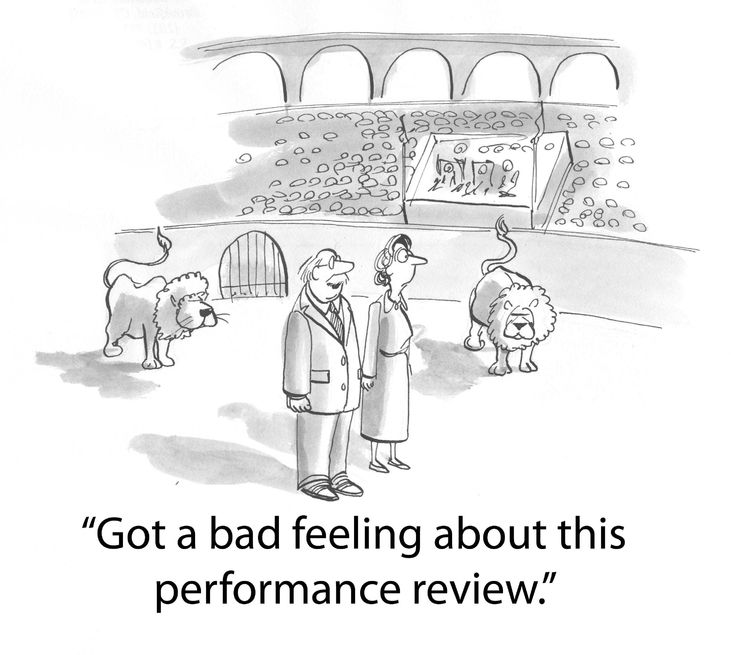
performance review cartoon

A colleague of mine cautions that performance ratings say more about the marriage of the person doing the assessing than the performance of the person being assessed.

Turns out she may have a point.

Most people have some experience with performance appraisals. Maybe as part of an annual salary review. Or even just completing a customer satisfaction survey. It’s become a pretty ubiquitous process over the past decade or so.

Unfortunately it’s process that is flawed. Deeply flawed.

It turns out that we’re really bad at rating others. In fact, we’re so bad at it that someone has given the phenomenon a name—the Idiosyncratic Rater Effect.

And it’s well documented.

It was first shown in a study from 1998, published in Personnel Psychology. This was followed by a 2000 paper in the Journal of Applied Psychology. Then, in 2010, the results were confirmed by yet another paper in Personnel Psychology.

Each study found that the idiosyncrasies of the person doing the rating accounted for over half of the variations in ratings. The three studies put the number at 71%, 58% and 55%, respectively.

No other factor accounted for more than 20% of the score.

As performance management expert Marcus Buckingham put it in an interview

Most of what is being measured is the unique rating tendency of the rater. Thus ratings always reveal more about the rater than they do about the ratee.

Later in the same interview he highlighted the data quality problem facing organizations who rely on these flawed assessments, saying

We all need to grapple with that problem [the Idiosyncratic Rater Effect] as we move into the big data world of the future. We need to figure out how we put good data in.

Once this data ends up in the system, it’s sliced, diced and combined with other data to produce a range of derivative conclusions…all based on a false premise—i.e. that one person is able to effectively judge the performance of another.

There has been some suggestion that the Idiosyncratic Rater Effect can be minimized by averaging across many assessments. But this, amongst other things, assumes that the idiosyncrasies exhibited by raters are independent. That’s a big assumption.

Research on the Idiosyncratic Rater Effect has largely focused on HR. However, the same problems plague customer satisfaction surveys. Developers of iPhone apps have long suffered the vagaries of the App Store review process, for example. In what turns out to be a brutal demonstration of the Idiosyncratic Rater Effect a number of leading iOS app developers made a hilarious video of themselves reading one-star reviews received by their apps.

Business consultant and author Frederick Reichheld has argued for customer feedback to be boiled down to one question—or “The Ultimate Question” as he calls it in his book of the same name. This question is

How likely is it that you would recommend us to a friend or colleague?

In his research, satisfaction scores for this question, when compared with those for other questions, consistently showed the strongest correlation with repeat purchases or referrals.

Amazon is the latest company to say it will overhaul its controversial performance assessment rating system. This follows shake-ups at major organizations such as Goldman Sachs, the Pentagon, IBM and GE. Accenture has ditched ratings altogether.

Others have argued in defense of performance evaluations—looking at ways to “minimize” bias. This strikes me as an attempt to push on with something that is fundamentally flawed because no-one has a better solution.

We need to focus on linking individual performance directly and transparently to well-defined organizational goals. This isn’t easy. It’s been problematic when attempted in the US school system. But, if performance-related management is going to work, and gain credibility, it’s going to need a radical overhaul.

Filed Under: Data analysis, Data science, Decision science

Survival bias

November 9, 2016 By editor

This strip from Saturday Morning Breakfast Cereal is the best description of survival bias I’ve come across.

It’s a pernicious problem in day-to-day decision-making. Modern, sensationalist news reporting reinforces it. Frightening, surprising. “man bites dog” stories survive. Stories about everyday dangers end up in the bin.

When I was a child, my parents would tell me to go to school through fields and woodland so I was away from traffic as I dawdled around. Nowadays parents want their children in busy public areas when alone. Unless child attackers are now more numerous than careless drivers, this isn’t good advice.

Filed Under: Decision science Tagged With: survival bias

RIP polling

November 9, 2016 By editor

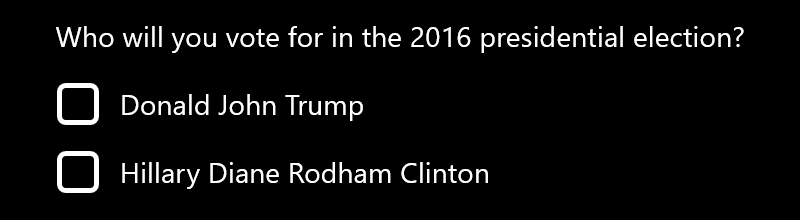
voting intention survey

Polling died last night.

It’s been terminally ill for a while now. The predictions for the UK general election in 2015 were abysmal. Brexit polls were unreliable. And polls put the Scottish independence referendum result in 2014 as a close call when it was a resounding “No”.

After its performance in last night’s US presidential election, we have to reach for the life support switch.

Here are the poll results immediately prior to the election.

PollWinnerMargin
Monmouth UniversityClinton+6
Lucid/The Times-PicayuneClinton+5
ABC News/Washington PostClinton+4
Fox NewsClinton+4
Insights WestClinton+4
New York Times/CBS NewsClinton+4
YouGov/EconomistClinton+4
Bloomberg/SelzerClinton+3
RasmussenClinton+2
IBD/TIPPTrump+2

FiveThirtyEight, which became famous for its predictions in previous US elections, had Clinton with a 71.4% chance of winning over Trump’s 28.6%. It also had Clinton comfortably winning the popular vote by 48.5% against 44.9%.

The Independent reported on a model from Moody’s Analytics that has correctly picked every president since 1980. Well…had. It forecast Clinton would pick up 332 Electoral College seats to Trump’s 206.

Sam Wang of the Princeton Election Consortium called the result on 18 October—a win for Clinton. He tweeted

It is totally over. If Trump wins more than 240 electoral votes, I will eat a bug.

That’s lunch today sorted then.

So much time, energy and column inches have been spent on techniques which, again and again, have come up short. We can still have these polls, but we need to get them off the front page and make space for them under the horoscopes.

The problem is that we all desperately want to know what is going to happen. So, there’s a market for people who profess to be able to tell us. Given the demand, if we are going to euthanize polling, we need a replacement.

Prediction markets seemed promising. However, when I looked at Betfair Predicts before the election it was giving Clinton an 83% chance of success. An average of nine predication markets (including Betfair) published just before the election gave Clinton a 82.5% chance of victory.

So much for that then.

Polling (and betting) is based on obtaining people’s opinions—ideally a lot of people’s opinions. Unfortunately, when we lack any reasonable precedent for a situation or decision, it’s very hard to have any kind of informed opinion. Becoming informed about complex socio-economic situations takes resources—an investment very few are willing to make just to enhance the accuracy of a one-off prediction of an event they can’t change.

Crowds have no wisdom when the individuals don’t have a clue.

What about those who put a bit more time into their opinions? Well, the superforcasters at the Good Judgement Project reported a 76% chance that a Democrat would win and a 64% chance that the Democrats would control the Senate.

So much for that then.

Is there anything we can do to predict the outcomes of these elections?

As physicist and Nobel laureate Neil Bohr said

Prediction is very difficult, especially about the future.

If we can’t rely on judgement the only way forward would seem to be to improve our ability to model and study the social physics of complex systems—such as the research published in the Journal of Artificial Societies and Simulation. We’re currently a long way from being able to use such approaches with any degree of confidence, but the techniques used in this field, such as agent-based simulation, have the potential to make predictions in novel situations.

Such techniques also tend to be expensive to use—especially when compared with running an online survey. However, we can’t just keep doing things that clearly aren’t working just because we can.

RIP polling. I won’t mourn you.

Filed Under: Decision science Tagged With: forecasting, polling, prediction, US presidential election

  • « Previous Page
  • 1
  • 2
  • 3
  • 4
  • 5
  • 6
  • Next Page »

Copyright © 2026 · Decision Mechanics Limited · info@decisionmechanics.com